Looking at the history and past of Iran, we realize the high position of art among Iranians. The arts have shown their beauty in all fields and every historical period. The spiritual heritage of carpets and carpet weaving has been one of Iranians’ most original and important arts for a long time. The Carpet Museum in Tehran is one of those places that, considering the importance of the history of carpets in Iran and promoting the original Iranian culture, exhibits the unique effect of carpets for art lovers by displaying them.
Tehran Carpet Museum is one of the country’s most important and valuable museums due to its precious treasures. Lovers of history, art, and Iranian and non-Iranian carpets visit this attractive place daily. Join us to travel to the carpet museum together and feel the beauty of carpets with all our being.
Introduction and history of Tehran Carpet Museum
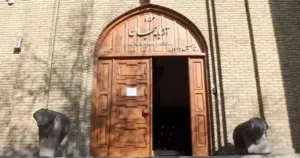
The Tehran Carpet Museum is located on the north side of Laleh Park in Tehran, covering an area of 12,000 square meters over two floors. The construction of this museum began in 1961 with the initial purpose of constructing a carpet gallery, but it remained unfinished and abandoned until 1976, when repairs began.
A year and a half later, on February 13, 1977, it was completed and inaugurated by Farah Pahlavi. The museum exhibits exquisite and valuable carpets and kilims from all over Iran, each using colors that hold special meanings and unique patterns that express the feelings and beliefs of the Iranian people, derived from nature, the daily life of the villagers, and the epic of Shahnameh.
The Carpet Museum preserves all kinds of kilims and hand-woven carpets according to their quality and antiquity, taking into account the special characteristics of Iranian carpets in terms of color, design, pattern, texture, and the variety of carpet weaving areas.
The purpose of establishing this museum was to create a place for research on the background and historical quality of pure Iranian carpet art and industry and to hold temporary exhibitions while collecting and purchasing samples of various hand-woven carpets and rugs from Iran other parts of the world. The museum also offers library facilities that can increase visitors’ awareness and familiarity with the art of Iranian carpets.
Architecture of the Tehran Carpet Museum
The building and exterior of the Carpet Museum boast attractive architecture that evokes in the minds of visitors the theme of carpets and black nomadic tents. The carpet museum building was designed and implemented by one of the most famous Iranian architects, Abdolaziz Farmanfarmaeian, who graduated from the National University of Fine Arts in Paris in 1330. The Tehran Carpet Museum is one of the masterpieces of this valuable architect, who has created a modern building based on Iranian identity and culture.
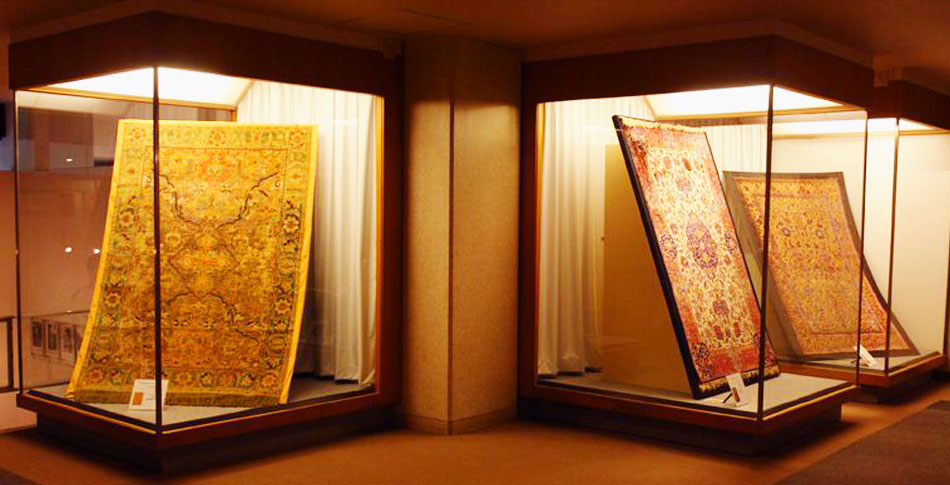
The museum’s main building is white and covers an area of 3400 square meters, which includes two large halls to display a variety of hand-woven carpets and kilims. The ground floor is a permanent exhibition that exhibits about 150 boards of the most exquisite carpets of Iran from different periods of history, from the ninth century to the contemporary era, as well as about 135 boards of Iranian carpet masterpieces related to important carpet weaving centers such as Kashan, Isfahan, Kerman, Tabriz, Khorasan, and Kurdistan. It is observed that this is a rich source of research for researchers and art lovers. The second floor of this complex is intended for holding temporary and seasonal exhibitions of kilims and carpets.
Features of Tehran Carpet Museum
The Tehran Carpet Museum features unique examples of pictorial carpets from the Shahnameh of Baysanghari, representing a rich blend of Iranian literature, myth, religion, culture, and art. These works were created using computer technology and the artistic vision of Mousavi Sirat in his workshop, with the help of young Iranian artists.
One of the museum’s most significant features is the valuable and exquisite Iranian hand-woven rug known as the Mirza Kuchak Khan Jangali rug. This rug has dimensions of 130 x 220 cm and was woven by Kashani carpet weavers, with an embossed image of this freedom-loving figure in military clothes and weapons. The inscription above the image of Mirza shows the history of its texture in the factory of Mullah Mahmud during the late Qajar period. Additionally, carpets from Sheikh Safi al-Din Ardabili with designs of gardens, orchards, animal symbols, and valuable works from the Safavid era with beautiful patterns and drawings are other exquisite works featured in this museum.
The museum’s oldest carpet is a 500-year-old Kashani carpet known as Sangshenko. The oldest carpet, Pazyryk, discovered in southern Siberia in 1949, is also featured in the museum. This carpet is considered the Persian texture of the Achaemenid period, indicating that carpet weaving existed and underwent a long evolution in the fifth century BC.
Carpet Museum
Carpet Museum
Carpet Museum
Carpet Museum
Carpet Museum
Carpet Museum Library
The museum library has about 3,500 books in Persian, Arabic, French, English, and German, catering to enthusiasts and researchers. The library offers the best books, publications, and research on Iranian and Oriental carpets and books on religion, literature, and art.
The museum bookstore also sells books that are published in this field. The theater within the museum showcases films and slides related to carpet weaving, kilims, and handicrafts for museum visitors. Periodic exhibitions are also held on the ground floor, as mentioned above. These exhibitions include patchwork, Armenian handicrafts, exhibitions of altar rugs from the tenth to fourteenth centuries, and embossed floral rugs from the eighth to the twentieth century to the occasion of the decade. Fajr, on February 3, 1985, can be named. These exhibitions attract many visitors every day.
Tehran Carpet Museum is a museum in Tehran, Iran, dedicated to showcasing the history and art of carpet weaving in Iran and other parts of the world.
What is the address of the Tehran Carpet Museum?
The address of the Tehran Carpet Museum is Dr. Fatemi St., Tehran 1411813383, Iran.
What are the opening hours of the Tehran Carpet Museum?
The opening hours of the Tehran Carpet Museum are from Saturday to Wednesday, 9:00 AM to 5:00 PM, and on Thursdays, from 9:00 AM to 8:00 PM. The museum is closed on Fridays.
What is the entrance fee for Tehran Carpet Museum?
The entrance fee for Tehran Carpet Museum is 200,000 Rials for Iranian adults and 500,000 Rials for non-Iranian adults. Children and students are admitted for a reduced fee.
What can visitors see at Tehran Carpet Museum?
Visitors to Tehran Carpet Museum can see a vast collection of hand-woven carpets and kilims from different regions and periods in Iran and other parts of the world. There are also exhibits showcasing the history of carpet weaving and the techniques used to create these intricate works of art.
Is there a gift shop at Tehran Carpet Museum?
Yes, there is a gift shop at Tehran Carpet Museum where visitors can purchase books, postcards, and other souvenirs related to carpet weaving and Iranian art and culture.
Is there a library at Tehran Carpet Museum?
Yes, a library at Tehran Carpet Museum contains over 3,500 books in Persian, Arabic, French, English, and German on carpet weaving, oriental carpets, religion, literature, and art.
Are there any temporary exhibitions held at Tehran Carpet Museum?
Yes, Tehran Carpet Museum holds temporary exhibitions annually that showcase various aspects of Iranian and international carpet weaving and related arts and crafts.
Is photography allowed at Tehran Carpet Museum?
Photography is generally not allowed inside Tehran Carpet Museum, but visitors can take photos outside and in the courtyard.
Is Tehran Carpet Museum accessible for people with disabilities?
Yes, Tehran Carpet Museum is accessible for people with disabilities, with ramps and elevators provided for easy access to different parts of the museum.